
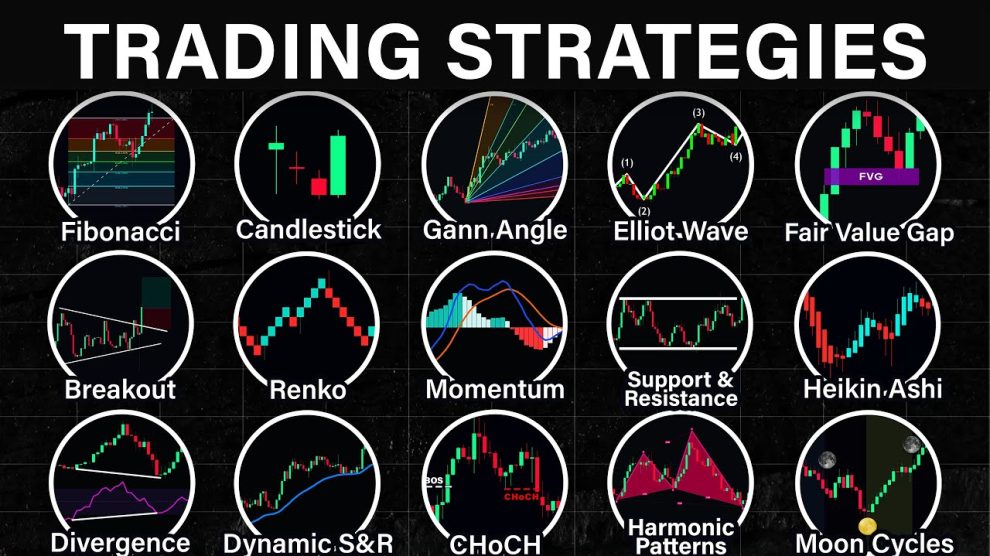
In today’s volatile financial markets, traders must go beyond basic techniques and adopt advanced strategies that combine data analysis, technology, and psychological insights. Successful traders differentiate themselves by leveraging predictive models, risk management frameworks, and innovative trading tools. This article explores advanced approaches to trading, emphasizing strategies that enhance decision-making, optimize execution, and manage risk in sophisticated ways.
Quantitative Trading and Algorithmic Strategies
Quantitative trading involves using mathematical models and historical data to inform trading decisions. Traders who embrace algorithmic strategies can execute high-frequency trades, identify patterns, and exploit inefficiencies that are imperceptible to manual analysis.
-
High-Frequency Trading (HFT): Leveraging algorithms to execute trades within microseconds, capturing small price discrepancies across markets.
-
Statistical Arbitrage: Using quantitative models to identify temporary mispricings between related assets, generating consistent returns.
-
Backtesting and Simulation: Running historical data through trading algorithms to evaluate strategy effectiveness and optimize parameters before live execution.
By integrating quantitative methods, traders can enhance accuracy, reduce emotional biases, and uncover opportunities in highly competitive markets.
Risk Management with Advanced Techniques
Effective risk management separates profitable traders from those exposed to catastrophic losses. Advanced strategies extend beyond simple stop-loss orders to dynamic portfolio management and probabilistic modeling.
-
Value-at-Risk (VaR) Analysis: Estimating the maximum potential loss within a given confidence interval to guide position sizing.
-
Dynamic Hedging: Adjusting hedges continuously based on market volatility and portfolio exposure.
-
Scenario Stress Testing: Simulating extreme market conditions to assess resilience and prepare contingency strategies.
Robust risk management ensures traders preserve capital while maintaining the flexibility to exploit high-potential opportunities.
Sentiment Analysis and Market Psychology
Market sentiment and trader psychology heavily influence asset prices. Advanced traders utilize natural language processing (NLP) and sentiment analysis tools to gauge market mood and anticipate price movements.
-
News and Social Media Monitoring: Analyzing breaking news, tweets, and financial reports to detect shifts in investor sentiment.
-
Behavioral Indicators: Evaluating crowd psychology and trader behavior patterns to predict overreactions or herd movements.
-
Contrarian Strategies: Leveraging sentiment extremes to identify potential reversals in overbought or oversold markets.
Understanding market psychology allows traders to align positions with or against prevailing sentiment, enhancing timing and strategy effectiveness.
Multi-Asset Trading and Diversification
Sophisticated traders do not limit themselves to a single asset class. Advanced strategies often involve multi-asset trading, balancing equities, forex, commodities, and derivatives to optimize returns and reduce portfolio volatility.
-
Cross-Asset Correlation Analysis: Identifying relationships between asset classes to exploit price movements or hedge risks.
-
Diversification Strategies: Spreading exposure across multiple instruments, sectors, and geographies to minimize the impact of adverse events.
-
Global Market Arbitrage: Taking advantage of price inefficiencies between different exchanges and regions.
Multi-asset strategies provide greater flexibility, improved risk-adjusted returns, and more opportunities in dynamic market conditions.
Technical Analysis Beyond Basics
Advanced traders apply technical analysis with precision and depth, integrating multiple indicators, patterns, and predictive models.
-
Multi-Timeframe Analysis: Studying price action across different intervals to identify long-term trends and short-term entry points.
-
Algorithmic Pattern Recognition: Using AI to detect complex chart patterns, support/resistance zones, and momentum shifts.
-
Volatility-Based Strategies: Adjusting positions based on implied and historical volatility to optimize risk-reward ratios.
Enhanced technical analysis empowers traders to make informed, timely decisions and improve trade execution precision.
Algorithmic Execution and Smart Order Routing
Execution efficiency is critical in high-speed markets. Advanced traders utilize algorithmic order execution to minimize market impact and slippage.
-
Smart Order Routing (SOR): Automatically directing trades to the best available liquidity across multiple exchanges and trading venues.
-
Execution Algorithms: Utilizing VWAP, TWAP, and iceberg orders to optimize entry and exit points without revealing intentions to the market.
-
Latency Reduction: Implementing high-speed infrastructure and colocated servers to gain millisecond advantages in trade execution.
These execution techniques allow traders to maximize profits while reducing transaction costs and market disruption.
Derivatives and Leverage Optimization
Derivatives such as options, futures, and swaps provide advanced traders with tools to enhance returns, hedge risks, and exploit complex market scenarios.
-
Options Strategies: Employing spreads, straddles, and butterflies to profit from volatility and directional movements.
-
Futures Arbitrage: Exploiting pricing discrepancies between futures contracts and spot markets.
-
Leverage Management: Applying leverage strategically to amplify returns while controlling exposure and potential losses.
Derivatives and leverage enable traders to achieve sophisticated risk-return profiles not possible with cash instruments alone.
Data-Driven Decision Making and AI Integration
Modern trading relies heavily on big data and artificial intelligence to uncover opportunities invisible to human analysis.
-
Predictive Models: AI algorithms forecast price trends, volatility, and liquidity shifts using historical and real-time data.
-
Portfolio Optimization: Machine learning optimizes allocations dynamically based on changing market conditions and risk appetite.
-
Sentiment-Integrated Models: Combining quantitative data with sentiment insights for a holistic market perspective.
Integrating AI and data analytics allows traders to operate at the frontier of speed, accuracy, and predictive power, outperforming conventional strategies.
Regulatory Compliance and Ethical Trading
Advanced traders operate within stringent regulatory frameworks while maintaining ethical standards. Regulatory awareness protects capital, reputation, and long-term sustainability.
-
Compliance Automation: Utilizing technology to monitor adherence to market rules and prevent violations.
-
Transparency and Reporting: Maintaining accurate records for audits, tax obligations, and regulatory reporting.
-
Ethical Trading Practices: Avoiding manipulative or deceptive practices that could result in legal or reputational harm.
Ethical compliance ensures traders operate confidently in global markets while minimizing legal and operational risks.
FAQ: Advanced Trading Strategies
Q1: How can AI improve trading performance?
AI enhances predictive accuracy, identifies hidden patterns, and enables faster decision-making, giving traders an edge in complex markets.
Q2: What is statistical arbitrage and how does it work?
It involves identifying pricing inefficiencies between related assets and executing offsetting trades to capture risk-adjusted profits.
Q3: How do traders use sentiment analysis effectively?
By monitoring news, social media, and behavioral trends, traders anticipate market reactions and adjust positions accordingly.
Q4: How can multi-asset trading reduce portfolio risk?
Diversifying across asset classes, regions, and sectors minimizes the impact of adverse events in any single market.
Q5: What role do derivatives play in advanced trading strategies?
Derivatives allow hedging, leverage, and complex profit strategies, providing tools to manage risk and exploit market movements.
Q6: How do execution algorithms improve trade efficiency?
They minimize market impact and slippage by optimizing order placement and timing using smart order routing and VWAP/TWAP techniques.
Q7: What metrics are critical for evaluating advanced trading strategies?
Key metrics include Sharpe ratio, maximum drawdown, win-loss ratio, trade execution efficiency, and risk-adjusted returns.